Research
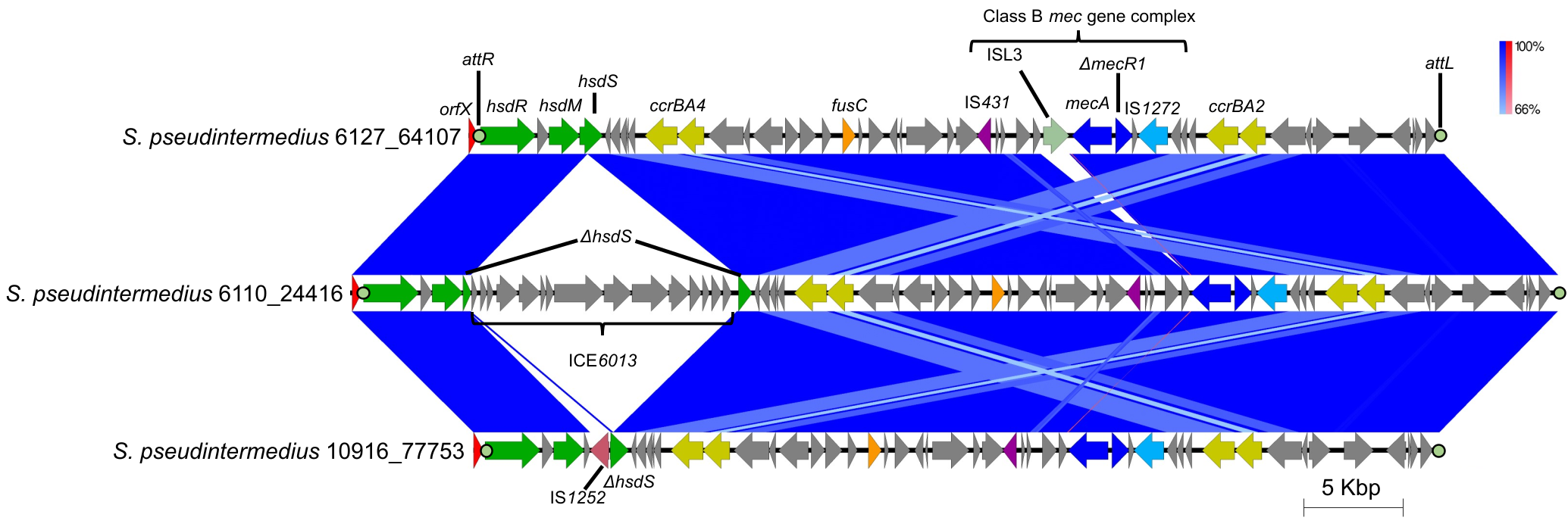
How does antimicrobial resistance spread between bacterial species? Antimicrobial resistance (AMR) is one of the most pressing challenges in medical microbiology. While much attention has focused on resistance in individual pathogenic species, less is understood about how resistance determinants move between species, and in particular, what role commensal bacteria play as reservoirs and vehicles for resistance gene transfer.
My research addresses this question through the lens of staphylococcal cassette chromosome mec (SCCmec): the mobile genetic element responsible for methicillin resistance in staphylococci and mammaliicocci. SCCmec is well characterised in Staphylococcus aureus, where it defines MRSA. But the broader Staphylococcus genus (including dozens of species that colonise skin, gut and mucosal surfaces of humans and animals), harbours a far greater diversity of SCCmec elements than has been appreciated. These non-aureus staphylococci may act as the evolutionary workshop where novel SCCmec elements are assembled before transferring into S. aureus and other pathogens.
SCCmecExtractor
To investigate SCCmec diversity at scale, I developed SCCmecExtractor, a bioinformatics tool that detects, extracts and characterises SCCmec elements from staphylococcal and mammaliicoccal genome assemblies.
The tool identifies integration sites (attL/attR), extracts the intervening element and characterises its content: mec gene and ccr recombinase genes. It works across the entire Staphylococcus genus, not just S. aureus.
Current version: v1.3.0 | BLAST-based detection | Gene content “typing” | Unified Report
GitHub repository | Paper in preparation
Key Findings
Analysis of over 5000 non-aureus staphylococcal genomes has revealed:
Recombinase specificity: The CcrC recombinase shows strict specificity for divergent att sites, while CcrA4B4 shows unique dual substrate flexibility.
Composite elements: 452 genomes carry composite SCCmec elements containing multiple recombinase types, suggesting sequential integration events.
Inter-species transfer: 53 detected transfer events across species boundaries, with animal-associated SCCmec elements showing similarity to those in S. aureus.
These findings point to a much more dynamic picture of SCCmec evolution than previously recognised, with implications for understanding how methicillin resistance emerges and spreads.
Research Programme
My ongoing and planned work spans three areas:
Computational SCCmec diversity at scale — Analysis across >6,500 genomes (non-aureus and S. aureus), characterising composite elements and developing predictive models for SCCmec mobility.
Recombinase specificity and mechanism — CcrC is the most common recombinase in non-aureus SCCmec yet has never been experimentally characterised. I aim to determine its biochemical specificity through in vitro recombination assays and structural modelling and to understand the dual substrate flexibility of CcrA4B4.
Inter-species SCCmec transfer — Testing computational predictions experimentally through co-culture transfer experiments with defined donor/recipient pairs.
Impact
SCCmec diversity in non-aureus staphylococci is not currently captured by routine genomic surveillance. SCCmecExtractor could complement existing tools used by public health agencies by enabling systematic monitoring of the commensal staphylococcal reservoir where novel resistance elements are assembled. Furthermore, extracting complete elements, rather than simply assigning a type, enables phylogenetic comparison of element structures and cargo across species, supporting epidemiological tracking of resistance element dissemination.
Associated Publications
- MacFadyen, AC; Paterson, GK. (2024). Methicillin resistance in Staphylococcus pseudintermedius encoded within novel staphylococcal cassette chromosome mec (SCCmec) variants. 2024, dkae096. doi: 10.1093/jac/dkae096
- MacFadyen, AC; Harrison, EM; Morgan, FJE; Parkhill, J; Holmes, MA; Paterson, GK. (2019). A mecC allotype, mecC3, in the CoNS Staphylococcus caeli, encoded within a variant SCCmecC. Journal of Antimicrobial Chemotherapy. 1;74(3):547-552. doi: 10.1093/jac/dky502
- MacFadyen, AC; Fisher, E; Costa, B; Cullen, C; Paterson, G. (2018). Genomic epidemiology of methicillin-resistant Macrococcus caseolyticus from dairy cattle bulk tank milk in England and Wales. Microbial Genomics. 2018, Aug;4(8). doi: 10.1099/mgen.0.000191
- MacFadyen, AC; Harrison, EM; Ellington, MJ; Parkhill¬, J; Holmes, MA; Paterson¬, GK. (2018) A highly conserved mecC encoding SCCmec type XI in a bovine isolate of methicillin-resistant Staphylococcus xylosus. Journal of Antimicrobial Chemotherapy. 2018, Aug 27. doi: 10.1093/jac/dky333
In preparation
- MacFadyen, AC. SCCmecExtractor: A tool for extracting Staphylococcal Cassette Chromosome elements from Staphylococcus Whole Genome Sequences.
- MacFadyen, AC et al. SCCmec diversity in non-aureus staphylococci: evidence for inter-species transfer.